Showing posts with label MSA. Show all posts

Monday, April 25, 2016

Fisheries celebration in D.C.

Advocating for the fish: Meghan Jeans of the New England Aquarium and Patrick Paquette, a recreational fisheries representative from Hyannis, MA, take a break in the U.S. Senate cafeteria.

Nice brace of trout: Billy Enright of Cranston holds a nice brace of trout the he and friends Autumn Mitchell and Mike Manco (also of Cranston) caught by 6:30 a.m. on Opening Day.
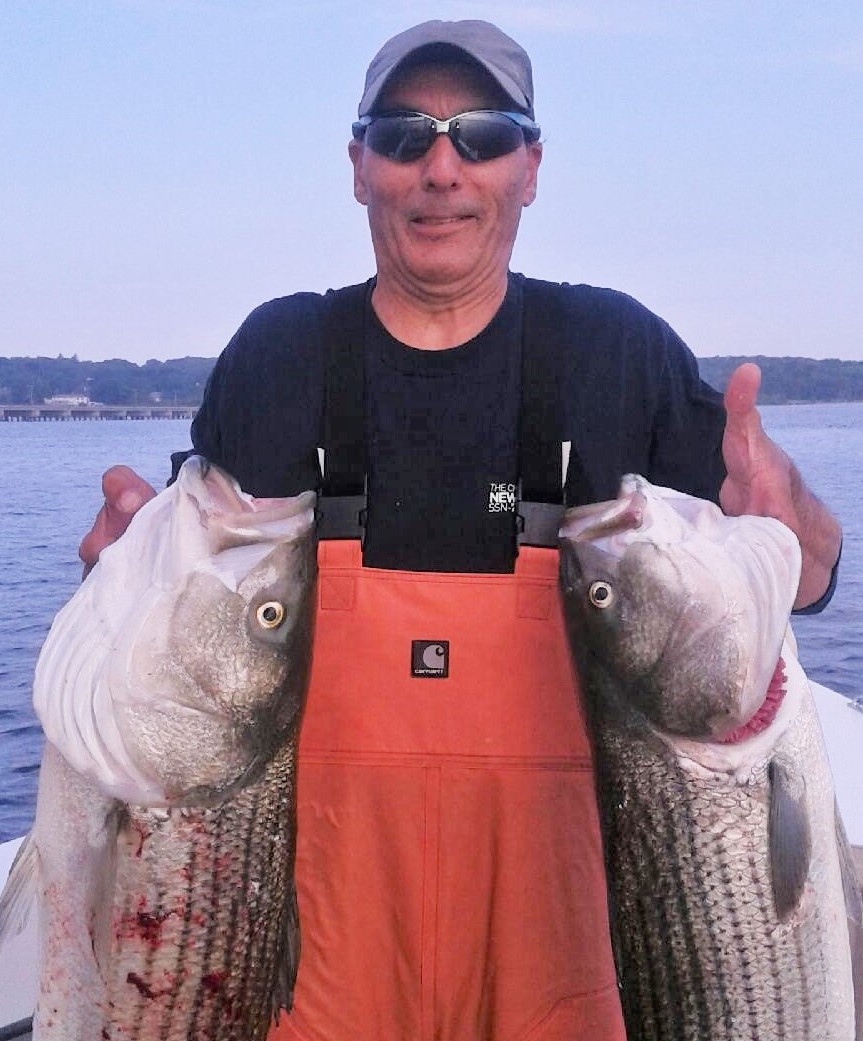
Keeper bass in Bay: Brandon Hagopian of Cranston with a keeper striped bass he caught last week in the upper Bay.  No lice on the fish indicate that it was likely a hold-over bass and not a migrating fish.
First Opening Day trout: Liam Farrell (age 13) proudly displays his first trout with Uncle Sean FitzGerald (both of Jamestown) as they fished with Alex (age 9) and Steve Greenberg of Narragansett.
Fisheries celebration in DC

What a celebration I attended this week.  April 13th was the 40th Anniversary of the Magnuson-Stevens Act (MSA), the fishing law of this Nation.  The celebration was held in Washington, D.C. sponsored by six conservation groups lead by The PEW Trusts.

Like all anniversaries it was a time for reflection.  To reflect on how successful the act has been and how it needs to be adjusted in the future.  The MSA and its reauthorizations provided the teeth needed to set firm allowable catch limits (ACL) which directly lead to 39 fish stocks being rebuilt today. So we need to keep this law strong, and make sure it continues to eliminate wiggle room so fishermen and fish managers have firm catch limits to continue to rebuild fish stocks.

Additionally, moving forward MSA needs to be adjusted to include things like enhanced forage fish protections, stronger by-catch provisions and most important a big-picture eco-system based management planning strategy.  We need an eco-system based management strategy because climate change and warming water has forced some fish out of our waters and forced other species (like black sea bass and summer flounder) into our area in greater numbers and present fisheries management strategies are not handling these changes.  Climate change, forage fish, stronger bycatch provisions are not consistently incorporated into a big picture management strategy and plan. 

The 40th Anniversary celebration of the MSA in Washington this week included informational meetings with members of congress and their staff.  Our Rhode Island, Massachusetts and Connecticut congressional delegations and staff members met with representatives from the commercial and recreational fishing community, the New England Aquarium as well as a number of conservation groups in New England to reflect on MSA successes and future adjustments needed.

So happy 40th Anniversary to the Magnuson-Stevens Act.  You have served the fish well.

Opening Day big success

The Opening Day of trout season this past Saturday was a big success.

“I got one” said Liam Farrell (13 years old) from Jamestown as his uncle Sean FitzGerald looked on with pride.  It was Liam’s first Opening Day fishing experience.  “It was tough getting up early but well worth it.” said Liam. Billy Enright of Cranston said, “We have been coming here for ten years.  We haven’t missed a year.  The three of us have about a dozen fish so far.”  It was 6:30 a.m. and they had been fishing for about 30 minutes.

The Rhode Island Department of Environmental Management (DEM) did an outstanding job stocking ponds with 80,000 hatchery raised brook, brown and rainbow trout this year.  Over 100 waterways have been stocked and this year three new locations were stocked on the Ten Mile River, marked by white trout fishing signs, include the intersection of 114A and Hunts Mill Road and just below the John Hunt House at 65 Hunts Mill Road. Visit www.dem.ri.gov for a complete list of stocked ponds.

Proposed BIWF and sea2shore safety zones clarified

The scope of the draft Safety Area (a 500 yard safety zone) that the USCG has published in the Federal Register pertaining to the Block Island Wind Farm (BIWF) and the sea2shore cable run was clarified last week by Ed Leblanc (USCG).  In a note to Elizabeth Marchetti, fisheries liaison, from Mr. Leblanc said "The Coast Guard's intent with respect to the proposed safety zones is to enforce each individual safety zone only when construction vessels are on-scene at an individual turbine.  As discussed in the proposal regulation, the Coast Guard intends to create individual, 500-yard radius, safety zones around each turbine. In essence, five safety zones, one for each turbine.

Vessels (other than BIWF construction vessels) will be precluded from entering safety zone only when construction vessels are on scene.  So, for example, if there are construction vessels working on turbine #3, but no work vessels at any of the other turbines, mariners must stay at least 500 yards away from turbine #3, but are free to approach as close as they want to turbines #1, 2, 4, and 5 (consistent with prudent and safe navigation, of course).

If there are work vessels at both turbines #1 and #2, mariners must remain clear of those two turbines but have full access to waters around the other three, and so on."

A copy of the Federal Register Notice and the place to submit comments on the proposed regulation by April 17th is  https://www.regulations.gov/#!documentDetail;D=USCG-2016-0026-0012.

Captains donate food and cash to Jonnycake Center
The Rhode Island Party & Charter Boat Association (RIPCBA) held their annual captain’s banquet at Spain Restaurant in Narragansett, RI with their favorite charity being recognized with donations.  John Rainone, RIPCBA past president and donation coordinator said, “Captains and their guests attending the event donated 242 pounds of food and $130 in cash to the Jonnycake Center in Peace Dale.  The Association has done this for the past several years and we were happy to do it once again this year. Great Job all.”

Roddy Fly Rodders to Meet April 19th

The Rhody Fly Rodders will hold their annual cookout get-together on Tuesday, April 19th at 6:00 p.m. Members, guests and new comers are welcome to attend, enjoy the food and talk about the upcoming fishing season.  A short film about fly fishing adventures will be shown, followed by a brief presentation by Mike Bucko who heads of DEM’s new department administering the Access Point Angler Intercept Survey (APAIS). The meeting will take place at the Riverside Sportsman’s Association, 19 Mohawk Drive, East Providence.  Contact president Peter Nilsen with questions at pdfish@fullchannel.net.

Where’s the bite

Freshwater fishing was hot this week with many bait & tackle shops reporting brisk sales.  Manny Macedo of Lucky Bait & Tackle said, “Customers did very well at Willet Avenue Pond, East Providence but found the Brickyard Pond, Barrington was not yielding the fish it had in the past.  Many had seen cormorants and other birds working the pond and leaving with a lot of fish so many anglers didn’t even fish there.  Popular baits this year included scented Power Baits such as chunky cheese and other scented flavors.  These worked well in MA but in some Rhode Island ponds like Willett Avenue the fish were biting just about anything anglers put in the water.  In addition to the Power Baits a variety of small silver lures were working well as well as spinner baits of all types.”  Tom Giddings of the Tackle Box, Warwick said “We sold out of just about all trout baits this weekend including trout worms and meal worms and had to replenish our inventory in a hurry.” 

Spirited bass migration continues to move north.  On-the Water’s Striper Migration map (http://www.onthewater.com/striper-migration-map-april-8-2016/ ) indicates that the school bass are in southern Connecticut.  However, there have been some reports of migrating school bass being caught in the Pawcatuck River in Westerly.  Mike Wade of Watch Hill Outfitters, Westerly said, “There have been migrating bass caught right here in downtown Westerly at the bridge (crossing the Pawcatuck River).”  Manny Macedo of Lucky Bait & Tackle, Warren said, “I checked with the On-the-Water migration map, it was pretty reliable last year but also believe that we can have some advanced schools of bass and it is very possible they are in southern Rhode Island now.”
Cod fishing remains good in local waters offshore.  Boats did not sail often last week due to bad weather, but when they fished boats had fair trips, with lots of bait and cod on fish finders. With improved weather all hope the good cod bite continues. 

Friday, March 11, 2016

Magnuson-Stevens Act gets reviewed

Samuel D. Rauch III, Deputy Assistant Administrator for Regulatory Programs at NOAA after testifying at a U.S. Senate fisheries hearing in Washington, D.C. last week.


Magnuson-Stevens Act gets reviewed

The Magnuson-Stevens Act (MSA), the nation’s landmark fisheries law, is now 40 years old.  I attended a senate hearing last week in Washington, DC to review the MSA. 

Members of the oceans subcommittee of the Senate Commerce, Science and Transportation Committee asked questions and heard testimony on the successes, challenges and forward path of the law that had been reauthorized in 1996 and 2006.

Samuel D. Rauch III, Deputy Assistant Administrator for Regulatory Programs at the National Oceanic and Atmospheric Administration (NOAA), offered testimony.

The bipartisan support of the MSA was very uplifting.  Many Senators noted the MSA has been very successful rebuilding fish stocks and is a global model for sustainable fisheries.

Some Senators related fisheries shortcomings that exist under the MSA such as the ability to handle challenges in fish populations due to climate change and warming water, the devastation of the ground fishery in the Gulf of Maine, the need to be more responsive to fishermen and fishing communities.

Senator Markey of Massachusetts brought up the plight of fishermen in his State that are catching large numbers of summer flounder and black sea bass and having the throw thousands of pounds of dead fish overboard because quotes have been kept too low without taking climate change into consideration.  Scientists believe climate change has caused a shift in the bio mass of these species up the east coast due to warming water in New England.  Senator Markey asked, “How is NOAA taking these climate changes into account when establishing fishing quotas.”

Samuel Rauch of NOAA addressed the climate change issue by relating work NOAA scientists have done in this area as well as relating how many of the other issues raised by Senators were being addressed or could be addressed within the existing MSA law.

Matt Tinning, senior director, U.S. Oceans Programs for the Environmental Defense Fund attended the hearing and said, “In some fisheries, improvements in management must be considered. But needed changes can be advanced within the existing legal framework (of the MSA), including through the stakeholder-driven regional council process that the MSA created. A complicated and protracted process of opening up the Magnuson-Stevens Act for reauthorization at this time is not only unnecessary but would be counter-productive. We urge Congress to keep what’s working.”


Congress is exploring new legislation to revise or reauthorize the MSA, many in the fishing community believe it is fine the way it is and that improvements can be made within the existing law.  Others believe that reauthorized or not, MSA needs safeguards added to address key issues such as eco-system based management.

Friday, November 27, 2015

Fishing laws need to reflect climate change

Roger Tellier of North Kingstown with a 26” cod fish he caught in the Seal Ledge area off Newport when tautog fishing Saturday.
Squeteague (or weakfish) caught by Mike Kwok from Palisades Park, NY while fishing the Frances Fleet.  Squeteague, once a popular fish in RI, is coming back with more and more caught in recent years.


Fishing laws need to reflect climate change

Climate change continues to warm local waters with mounting proof that it is changing our fishing environment.  Fishing is changing so much that warm water fish are moving into the northeast and cold water fish are moving to deeper cooler water. 

If the environment is changing then our fishing laws, which all stem from the Magnuson-Stevens Act (MSA) need to be updated to reflect these changes too.  Our fishing laws are based on historical fishing and survey data (what fish were caught where) and what was true in the past may not necessarily be true today or tomorrow.

Climate change can have a positive, negative or neutral effect on species with different tolerances in any given geographic area.  Over time we have seen in influx of warm water fish hear in our region, some of the changes have been good for fishing and some not so good. 
In Rhode Island, more cobia (an exotic warm water fish) have been caught than ever before, enhanced summer flounder and black sea bass have moved into southern New England but yet we have seen a decline in cold water fish like cod.

Dr. Jonathan Hare, director of the National Oceanographic & Atmospheric Administration’s (NOAA) Narragansett Laboratory, has long spoke about climate change and its impact on marine fisheries.  Dr. Hare said that along the northeast continental shelf, “Since 1854 ocean temperatures have risen 1.3 to 2 degrees Fahrenheit.”

Dr. Hare has shared a time lapse illustration that showed how yellow-tail flounder and summer flounder (fluke) are actually migrating north toward Rhode Island and other northern coastal states as the water warms.  This time lapse illustration uses catch and effort data supplied to NOAA by commercial fishermen as a condition of their license.  The data and time lapse illustration showed fish leaving waters to the south and moving northward.  Dr. Hare’s work provides proof of warming water and species movement in and out of our region.

In a recent article written by Ted Morgan of the PEW Charitable Trust, Morgan said, “Fish managers often develop fishing rules expecting that the same species will be found in roughly the same place every year. Setting catch limits for fishing requires some assumptions—and until recently, one of them has been that the vast ocean, while subject to cycles, is basically stable over time. But new information challenges that notion, as scientists and some policymakers have grown increasingly aware of long-term shifts in the ocean environment.”

Dr. Malin Pinsky of Rutgers University is a pioneer in using historical fishing trawl survey data collected by NOAA for years and looking at it differently.  The data includes the fish caught in the trawl as well as latitudes, longitudes and the depths of each trawl.  Once the historical fishing survey data base was built Dr. Pinsky and his team were able to pinpoint where fish populations were found—and if those locations changed over time. His work has been developed into an interactive application; it clearly shows movement of a variety of species in our region and can be found at http://oceanadapt.rutgers.edu/.


How can fishing laws change to reflect climate change?
We can do a lot to make sure our fishing laws and regulations reflect climate change. Our nation through NOAA is divided into seven regional fishery councils, in our area it is the New England Fishery Management Council.  Ted Morton of PEW said, “Unfortunately, not all of the nation’s councils are having these important conversations (about climate change and fish movement) as they make decisions, because the law does not require them to practice this kind of modern management.
“When Congress next changes the Magnuson-Stevens Fishery Conservation and Management Act, lawmakers should call for each council to create fishery ecosystem plans—road maps that can help managers understand the environmental factors that influence their fisheries so they can account for them and make more informed decisions.” said Morton. 
The Magnuson-Stevens Act is 40 years old and has been updated several times. It is now time for another update.

Striped bass fishing on Block Island
Capt. John Sheriff of Captain Sheriff’s Fishing Charters, LLC will give a RI Saltwater Anglers Association presentation on tips and techniques for catching striped bass with a focus on Block Island on Monday, November 30, 7:00 p.m. at the West Valley Inn, West Warwick.  Non-members welcome with a $10 donation to the RISAA Scholarship Fund, RISAA members attend free. Dinner offered by the West Valley Inn between 5:30 p.m. and 6:30 p.m.  Visit www.risaa.org for information.

Where’s the bite

Tautog fishing continues to be strong.  Stormy weather and dirty water did slow the number of angler trips last week but the water settled and anglers were out the fishing was good.  Capt. Charlie Donilon of Snappa Charters said, “Black fish off Newport has been very good with our largest fish averaging 7 or 8 points and last week during the big blow we managed to fish off Narragansett with angels limiting out.”  Ken Ferrara of Ray’s Bait & Tackle, Warwick said, “Things are slowing down in the Bay with a tautog bite weakening.  Customers that went south this weekend to Beavertail and the Kettlebottom area off Jamestown as well as off Newport did pretty good catching tautog and a cod every now and then.  I fished with Roger Tellier, secretary of the RISAA board of directors this weekend and he caught a 26” cod while fishing for tautog in the Seal Ledge are off Newport.  Angler Chris Jalbert from South County said “Went Monday morning (last week). Most finicky/delicate bite of the season so far. I missed a TON of fish. We got our limit in 3-4 hours. Most fish 4-6#. Also got one of the biggest of our season - 10 plus pounds."  "The tautog bite seems to be best in 80 feet of wae"  “The tautog bite seems to be best in 70 to 80 feet of water with anglers till catching in lower water too.  Fishing the edge of the Pinnacle off Narragansett at 70 feet, off Brenton Reef on the edges and areas at the mouth of the Sakonnet has been good." said Matt Conti of Snug Harbor Marian, South Kingstown. South Kingstown. Capt. Frank Blount, of the Frances Fleet, said, “Tautog fishing continued to be good even after a couple days off due to heavy southerly winds.  Pool fish generally in the 8 to 11 pound range with many limit catches recorded. Tremendous amounts of short tog provided long lasting action in between the keepers. The sea bass have definitely become fewer but there has been a slight increase in the number of keeper cod fish being caught and more of them are gaff-worthy. In fact on a couple trips cod fish in the low teens took the pool honors of tautog trips.”

Cod fishing remained very strong, even in some areas close to shore this past week.  Capt. Charlie Donilon of Snappa Charters said, “Last week we did very well with cod and sea bass south of Pt. Judith and southeast of Block Island. We caught 31 keeper cod, the best in years.  We dropped anchor and it was like the way it used to be.  We limited out on black sea bass too with 42 fish.  It was definitely like the days of old.  In fact, we had to just stop fishing.   The largest cod were 10 and 11 pounds cod and 6 pound black sea bass.”  Matt Conti of Snug Harbor Marina said, “Cod fishing has been good with angler’s dong well at the East Fishing Grounds, Cox’s Ledge and at Shark Ledge.”


Striped bass fishing has taken a back seat to tautog and cod fishing, however, anglers are catching migrating fish.  “Schools of herring were off the southern coastal shore this week with garnets diving on them so I’m sure some are picking up bass feeding on the herring .” sad Matt Conti of Snug Harbor Marine.

Thursday, July 2, 2015

Bay and ocean exploding with activity

 Angler Brian Dick caught this 16 pound striped bass at Brenton Reef Tuesday while fishing On the Rock’s Charters.
 Michael Strashnick of Warwick with two nice fluke he caught off Warwick Light last weekend.
 Anthony Marfeo Jr. and his dad have been catching big largemouth bass.  This fish was caught on medium heavy minnows early this week.
 Peter Vican of East Greenwich with the 52.45 pound striped bass caught Saturday off Block Island.  This is his 33rd fish over 50 pounds; he holds the RI State record with a 77.4 pound fish caught in 2011.
 Sean Stanford of Jamestown with the 9.25 pound fluke he caught this week on the Seven B’s party boat using a fluke belly and a sand eel as bait.
 Lary Norin (back row, far right) was part of the team that boated this 290 pound thresher shark last week aboard Hot Reels Charters with Captains Louis DeFusco and Jack Sprengel. 
Mike Swain with a 40” and a 43” striped bass caught in the East Passage of Narragansett Bay Tuesday.

Bay and ocean exploding with activity

A month ago fishing news was dribbling in but this week the faucet was wide open as fishing (catching) reports accelerated with anglers offshore, in the upper and lower bay, along the coastal shore, at Block Island and in freshwater with a strong largemouth bass bite.

Here is a thumbnail of what’s going on:

Tuesday Mike Swain of Coventry and his fishing partner boated a 40” and a 43” striped bass early morning using pogies in the east passage.

Capt. Louis DeFusco of Hot Reels and Capt. Jack Sprengel of East Coast charters landed a 290 pound thresher shark with Larry Norin, Rick Sustello and four other anglers on board.

RI state striped bass record holder (77.4 pounds) Peter Vican of East Greenwich landed is 33rd striped bass over 50 pounds… a  52.45 pound fish he caught off the south side of Block Island at 5:00 a.m. on Saturday using a live eel.

Tuesday, Brian Dick from Connecticut was fishing with Capt. Rene LeTourneau of On the Rock’s Charters and boated a 16 pound striped bass off Brenton Reef, Newport using a needlefish lure.

Michael Strashnick of Warwick boated several keeper fluke right off Warwick Light this weekend.

Fluke fishing out in front of southern coastal beaches has improved daily with 3 to 4 pound fish being caught and 7 and 8 pound fish being weighed in too said Phil Matteson of Breachway Bait & Tackle, Charlestown. 

Fishing regulations receiving pressure

During the past several months there have been a number of key proposed policy changes that if approved could greatly impact our fisheries. Some say the proposed changes will weaken regulations having a long term negative impact on fisheries, while others say the policy changes will have a positive impact on fishing immediately providing much needed relief for commercial fishermen and fishing communities in New England.  Here are some highlights.

Magnuson-Stevens Reauthorization bill

Last month, in a highly partisan vote, the U.S. House passed a bill that would weaken the Magnuson-Stevens Fishery Conservation and Management Act.  Matt Mullin, from the Environmental Defense Fund said, “The bill, as passed by the House would undercut proven environmental law including the Endangered Species Act and the National Marine Sanctuaries Act; weaken rebuilding and quota provisions; restrict data from the public; and limit options for fishermen.”

It is important for recreational and commercial fishermen to weigh in on the Reauthorization bill; particularly if/when a Senate version of the bill starts to go thought the legislative process in the U.S. Senate.

NOAA National Standard 1 changes would weaken Magnuson-Stevens

On June 30 the National Oceanic & Atmospheric Administration (NOAA) closed its comment period on policies that would weaken key parts of the Magnuson-Stevens Act and provide regional managers with more flexibility. 

NOAA’s proposal would revise the act’s National Standard 1 guidelines making them more flexible in response to fishermen who have claimed fishing laws are too rigid. 
A statement from the Pew Charitable Trusts, the Conservation Law Authority and three other conservation groups said, “The proposed new rules promote strategies that would increase the risk of overfishing and would allow managers to leave populations at low levels rather than rebuild them quickly and to forgo management of fish stocks in need of conservation.”   

The statement related the proposal would allow managers to delay lowering catch limits in response to scientific information, increasing the risk of overfishing; obscure information about overfishing (by averaging several years of data); raise quotas by carrying over uncaught fish from the previous year without determining whether the population is healthy; and continue using deficient plans for rebuilding overfished stocks to healthy levels, instead of revising the plans to restore populations more quickly. The statement said, “The proposal would allow managers to keep using rebuilding plans that did not meet their goals and to extend timelines for rebuilding overfished stocks for years or even decades beyond what would be allowed currently.

At press time, the public comment period closed on these policy changes and the fishing community is waiting to see if NOAA will enact all or some to these proposed National Standard 1 guideline changes.

ASMFC summer meeting

The Atlantic States Marine Fisheries Commission’s (ASMFC) 2015 Summer Meeting is scheduled for August 4-6, 2015 in Alexandria, Virginia.  The ASMFC makes coastal fishing regulations for many of the species we fish in Rhode Island including striped bass, summer flounder, black sea bass, tautog and a host of others.

The preliminary agenda includes important Management Board meetings for tautog, striped bass and Atlantic menhaden that will impact the 2016 Fishing Management Plans for these species.
The tautog board will review and discuss a Draft Public Information Document for Amendment 1 to the tautog Interstate Fishery Management Plan.  The most recent tautog assessment will likely bring more conservation tautog relations for recreational and commercial fishermen in RI. 

Key issues on striped bass include a review of the Technical Committee’s Report on the likelihood of achieving fishing mortality targets with the regulations that were finally implemented (one fish at 28” minimum size for recreational fishermen and a 25% commercial quota reduction), and progress on management level projections using the Chesapeake Bay and Coastal Fleet reference points. The Board will also review and possibly approve the 2015 FMP State Compliance Reports. 

Important Atlantic menhaden discussions will focus on an update from the Atlantic menhaden working group on the progress of ecosystem-based management goals and objectives.  This was a key component/concession with the vote taken by the Commission at their last meeting when they increased quota by 10%.

Rhode Island ASMFC representatives usually hold an input meeting for fishermen on agenda items prior to the ASMFC meeting.  Watch for this meeting notice. An updated agenda and materials will be available on July 23, 2015 at http://www.asmfc.org/home/2015-summer-meeting.


Where’s the bite
“Freshwater trout fishing has slowed down substantially.” said John Wunner of John’s Bait & Tackle, North Kingstown.  However largemouth bass fishing is hot.  Dave Henault of Ocean Sate Tackle, Providence said, “Customers Anthony Marfeo (junior and senior) have been catching good sized largemouth bass every day, four times a week, using medium heavy shiners. They are fishing multiple lakes and ponds north and west of Providence.”

Striped bass. Angler John Rivera of Portsmouth (when visiting Fin & Feather Outfitters, North Kingstown) said, “I fished all night Saturday starting at the Narrows, then Black Point, Narragansett, followed by the Cliff Walk in Newport.  The fish were not interested in the flies I had.  Looked like they might have been eating shrimp.  Switched to spinning gear and ended up at the Cape Cod Canal landing four fish in the ten to fifteen pound range.  In general fishing in the lower Bay from Portsmouth to Newport Harbor has been good at night.  I often fish on my kayak and heard that last week kayakers landed a 40 and a 50 pound fish at the Newport Bridge, one on a live pogie and a second on a squid.” Phil Matteson of Breachway Bait & Tackle said, “Fish in the 15 to 34 inch are being caught in the salt ponds with anglers catching them with plugs and small Slug Gos.”  The bass bite on Block Island is improving.  Ken Landry of Ray’s Bait & Tackle said, “It is a messed spring with the bass bite on and then off on any given day.  Some schools of menhaden have bass feeding on them and others don’t.  Some guys are fishing at night on Block Island for one bite and that’s it.  From shore anglers are doing OK. We have a couple of customers that landed 32” fish at Beavertail this week.  The old timers say when we have a cold winter the fishing season will last longer, but what they forgot to tell us is that it will start slower too.”

Fluke/black sea bass fishing had been good at Warwick Light and south of Patience Island.  Some guys are landing them in 10’ of water and others in 70’ of water.” said Ken Landry.  I fished the Warwick Light area Sunday with angler Steve Brustein and we caught short flounder, we moved to north of the Jamestown Bridge and landed multiple sea bass to 21”.  Anglers are happy about the sea bass opening July 2 as they have been catching them while fluking.  As of July 2, anglers are allowed to take one sea bass/person/day. The limit increases in September to seven fish/person/day. Frank Mello of Lucky Bait & Tackle, Warren said, “Customers are landing summer flounder in the Rocky Point and Conimicut areas.” Both the Seven B’s and the Frances Fleet party boats had a good fluke fishing week. Capt. Russ Benn of the Seven B’s said “Several fish in the eight to ten pound range were caught this week including a 9.25 pound fish caught by Sean Stanford.”

The scup bite continues to get stronger with anglers landing them just about anywhere in the Bay.  “Customers are catching big scup at Colt State Park and at the bridges (in Barrington and Warren)." said Frank Mello of Lucky Bait.

Atlantic bonito.  Yes bonito!  Dave Henault of Ocean State Tackle said, “Bob Turcotte landed a small bonito Saturday about ¼ mile off the beach at Little Compton.  It was the only bonito caught on a crippled herring.  The bass, blues and the bonito were feeding on sand eels." 

Thursday, June 4, 2015

Saltwater fly fishing flourishing in Little Rhody


Mike Swain of Coventry landed fluke to 5.5 pounds off Jamestown and Newport this Saturday.
Scott Kiefer and his dog landed this 36” striped bass off Prudence Island last week using a Sebile Koolie Minnow.

Capt. Roland Guyette of Offshore Charters landed this summer flounder (fluke) in 53 feet of water off the center wall of the Harbor of Refuge.

Vinnie Catauro of East Greenwich landed eleven bass to 36” while fishing in Narragansett Bay last week.


Brandon Hagopian of Cranston landed this 30 pound striped bass from shore in Providence Monday using 12 pound test line and light tackle.


Saltwater fly fishing flourishing in Little Rhody


Rhode Island has played a huge role in the development of saltwater fly fishing.  Our miles of coastline are perfectly suited to cast a fly and an abundance of sport fish such as striped bass and bluefish in the spring and bonito and false albacore in the fall made us the perfect place for saltwater fly fishing to flourish.

Rhode Island’s fly fishing clubs such as the Rhody Fly Rodders (the oldest saltwater fly fishing club in America) and its members have paved the way nationally for saltwater fly fishing.

This year, the Orvis Company recognized that Rhode Island is the perfect place to saltwater fly fish and is holding their highly acclaimed Orvis Saltwater Fly Fishing School at The Saltwater Edge, 1037 Aquidneck Avenue, Middletown, RI.

The two day school is being held on four weekends in the spring and two weekends in the fall.  Anglers  will learn how to tie essential knots, how to choose gear and tackle, proper fly selection, how to read water, currents and ties, and how to play, land and release fish safely.

Saltwater Edge owner Peter Jenkins said, “This is a comprehensive two day course that provides a solid foundation in the sport.” The Saltwater Edge also offers their own clinic for beginners. Jenkins said, “We also offer a Saltwater Fly Fishing 101 Clinic that provides a brief introduction and a bit of casting instruction.”  

For information call the Saltwater Edge at 401.842.0062 or visit www.orvis.com to learn more about the two day course. 

Commercial fishing agenda at RIMFC

The Rhode Island Marine Fisheries Council (RIMFC), which makes commercial and recreational saltwater fishing regulation recommendations, met Monday to address primarily commercial fishing issues.

Highlights include establishing a fall opening of the Narragansett Bay Maine Life Management Area to Atlantic menhaden purse seine commercial vessels after September 1 each year in areas south of the Jamestown and Newport Bridges as well as the area south of the line from Fogland Point to Sandy Point in the Sakonnet River.  The conditional opening would occur only if the states quota has not been exhausted or if the Episodic Event Set Aside Program has been enacted in RI.  A possession limit of 25,000 pound will be allowed in the area.

Regulations for commercial fishermen using cast nets or rod and reel to catch Atlantic menhaden were liberalized as well.  The council voted to recommend to the DEM director that commercial fishers should be allowed to fish on weekends and holidays for Atlantic menhaden supplying fishermen with bait on the weekends. 

Mike Bucko of Bucko Bait & Tackle Fall River said, “I support this new regulation as it will supply recreational fishermen with a fresh supply of Atlantic menhaden on the weekends too.”

In other important business the RIMFC unanimously elected Councilman Christopher Rein (an environmental engineer) to the position of chairman of the Industry Advisory Committee (IAC).  This year the IAC is scheduled to make important commercial fishing regulation recommendations reviewing, revising and updating many of the older fishing regulations in Rhode Island.

The council also heard alarming concerns for commercial fishermen about the rigid black sea bass, tautog and summer flounder regulations now in place in Rhode Island and all along the coast.  Fishermen said they were being driven out of business and asked that the RIMFC formulate a plan to address their concerns regionally where regulations are made.

RIMFC chairman Robert Ballou suggested that the issue be placed the agenda of the next meeting so DEM staff can relate stock status, regional fishing management plans, etc. for these species as well as hear concerns and recommendations that fishermen may have.
 
House approves reauthorization of fisheries act
Tuesday night the U.S. House of Representatives approved, by a 225-152 vote, H.R. 1335,  a revision and reauthorization of the Magnuson-Stevens Fisheries Conservation and Management Act (MSA).
The MSA is the primary federal law governing U.S. fisheries management.
In a statement, Robert C. Vandermark, executive director of the Marine Fish Conservation Network, said "We are disappointed with the House passage of HR 1335. The legislation passed by the House undermines the strong science and conservation measures within the current law and promotes greater uncertainty in the future management of our fisheries.” 
A version of the bill will now be taken up with the U.S. Senate.  Vandermark said, “We hope the Senate will follow in the tradition of Senators Magnuson and Stevens and work across the aisle to draft a bill that builds upon the law’s success and strengthens it to meet the new challenges our oceans and fisheries face. We look forward to working with the Senate to renew the Magnuson-Stevens Act for the benefit of fishermen, seafood business owners, coastal communities, and all Americans who rely on healthy oceans and productive fisheries."
In a press release issued yesterday by Save our Seafood, a commercial fishing industry organization, supporters said, “This bill will provide more flexibility in stock rebuilding and schedules as well as ease other regulatory burdens.”

Several key provisions of the bill include a provision that reforms the current 10 year stock rebuilding timeline to allow for more flexibility, as well as language that aims to make the management process more transparent by requiring the live broadcast of fishery management council meetings as well as making other materials publicly available.

The bill also included an amendment authored by Massachusetts Congressmen Keating, Lynch, and Moulton that would redirect the money in NOAA's Asset Forfeiture Fund to pay for fisheries research, at-sea and shore side monitoring costs, and other priorities to "rebuild or maintain sustainable fisheries, ensure healthy ecosystems, and maintain fishing communities."

Where’s the bite

Striped bass. Angler Scott Kiefer fished the Prudence Island area last week and landed a half dozen striped bass including a 36” fish.   Scott said, “They loved the Sebile Koolie Minnow and I had the Bay to myself which is great for East Greenwich Bay.”  Al Conti of Snug Harbor Marina, South Kingstown, said, “The boats are just getting out today (Wednesday) for the first time four days due to the weather.  However, the school bass bite in Potter and Salt Ponds has been very good.” Last week Vinnie Catauro of East Greenwich landed eleven striped bass in the Bay to 36”.   John Littlefield of Archie’s Bait & Tackle, Riverside said, “Things opened up for the big bass last Wednesday and Thursday from Port Edgewood to south of Conimicut Light.  I weighted in a 27 pound fish.  Another customer said he landed a 42” fish using a live poggy (Atlantic menhaden) in front of Port Edgewood Marina (Cranston).  He would put down a pogy and within five seconds a fish would pick it up.  Chucked pogies and umbrella rigs seemed to be working too. Friday there were 28 boats around Conimicut Light as the commercial pogy boats had taken a lot of the bait south of the light last week.” Capt. Ron Mouchon of Breachway Bait & Tackle, Charlestown said, “No bass have shown up at Block Island but we continue to catch school bass all along the southern coastal shore.  The largest fish I heard about last week was 39”.”  Ken Ferrara of Ray’s Bait & Tackle, Warwick, said, “Things opened up for bass fishing this week… Friday and Saturday early in the morning were the best days with anglers catching fish using live and chunked Atlantic menhaden as well as umbrella rigs. My daughter caught a 36” bass trolling near Bullocks Point light marker.” Brandon Hagopian landed a 30 pound striped bass from the Providence shore Monday.  His father said, “He was using 12 pound test line and light tackle.”

Summer flounder (fluke). Capt. Roland Guyette of Offshore Charters was fishing on his own this weekend and landed some nice fluke off the center wall of the Harbor of Refuge in 53 feet of water.  Capt. Guyette used a double buck tail rig, white and blue. His friend George Cioe said, “The largest fish hit the bottom blue rig baited with squid.”  Angler Mike Swain of Coventry and his fishing partner landed seven nice keeper fluke to 5.5 pounds Saturday fishing locations off Jamestown and Newport.  They were using squid for bait. Capt. Ron Mouchon of Breachway Bait & Tackle said, “We held our Annual Fundraiser Fluke Tournament for the food bank this weekend and the first place 6.25 pound fish was caught by Jonathan Cambridge of Boston.  Second place at 5.22 pounds went to Bob Jolly and third place at 4.76 went to Nick Thatcher.  All fish were caught west of New Harbor, Block Island.”  Ken Ferrara of Ray’s Bait, said “Customers are starting to catch fluke at Austin Hollow, Jamestown and at the Jamestown and Newport Bridges.”

Black sea bass are not legal to take at this time.  I landed and put back six nice black sea bass in the 15 to 16 1/2 inch range when fishing for summer flounder off Newport this weekend. The sea bass were returned to the water as the season starts July 2 (one fish/angler/day) at 14 inches and then on September 1 it jumps to seven fish/angler/day.

“Tautog fishing was good right to the end.” said John Wunner of John’s Bait & Tackle, North Kingstown.  John said he weighed in a 11 ½ pound fish last week and the customer caught two additional nice fish.  Tautog season ended May 31st and is now closed for the spawning season.  It will open once again August 1.

Wednesday, June 3, 2015

House bill would weaken fisheries act

 
Anthony Mecurio Jr. from Coventry RI with a fine brace of fluke he buck tailed onto the deck of the Gail Frances party boat last week.


Michael Fotiades of Narragansett, RI with squid caught last week on a recent RISAA trip.  His son George is in the background.


House bill would weaken fisheries act

A U.S. House of Representatives bill (H.R. 1335) titled "Strengthening Fishing Communities and Increasing Flexibility in Fisheries Management Act," that would reauthorize the Magnuson –Stevens Act is scheduled to come before the House next Monday. 

The Magnuson–Stevens Act (MSA) is the primary law governing recreational and commercial marine fisheries management in the United States. It was originally enacted as the Fishery Conservation and Management Act of 1976 and amended many times.  The two recent amendments were the Sustainable Fisheries Act of 1996 and then the MSA of 2006.

The supporters of this version or the reauthorization bill, which was authored by Alaska Congressman Don Young (R-AK), stated in a support letter that the bill will maintain the successful aspects of fisheries management under Magnuson-Stevens, while providing much-needed flexibility and economic relief to hard-working fishing communities.

According to Save Our Seafood (a seafood industry advocacy group comprised of commercial fish processors, fish brokers and boat owners), the support letter was sent last week to the House Natural Resources Committee Chair.  In a press release this week, Save Our Seafood said, “supporters of H.R. 1335 believe the bill will strike the appropriate ‘balance’ between addressing the ecological needs of fish stocks, the conservation goals of management, and the economic needs of fishing communities that are not being met by the current Act's rigid stock rebuilding requirements.”

However, there are two sides to every story.  Conservation minded fishermen and conservation groups throughout the country (including Pew Charitable Trusts and the Environmental Defense Fund) feel that this bill if passed will reverse much of the good that the MSA currently provides our fisheries.

Last year US Senator Sheldon Whitehouse, D-RI and our congressional delegation, held an fisherman’s input session at the URI Bay Campus.  At that meeting Rhode Island fishermen and Janet Coit, director of the RI Department of Environmental Management, testified in support of Magnuson-Stevens saying it has rebuilt many of our fish stocks and much of it should be left intact when it is reauthorized.

Meeting attendees complemented the MSA for establishing Allowable Catch Limits (ACLs) that facilitated the rebuilding of fish stocks.

In an issue brief (pewtrusts.org/en/research-and-analysis) Pew Charitable Trusts said, “(The bill) would significantly undercut the nation’s progress in preventing overfishing and rebuilding depleted fish populations. This shortsighted legislation would undermine the act’s core conservation provisions, jeopardizing the gains made in rebuilding and sustainably managing U.S. fish populations. It also would fail to advance a comprehensive approach to fishery management.”

Pew continued to say, “The Magnuson-Stevens Act should be updated in a way that promotes a comprehensive, 21st-century approach to managing the nation’s fisheries. But H.R. 1335 would move the country in the wrong direction, threatening the health of U.S. oceans and fish populations.”

NOAA seeks sanctuary volunteers

NOAA's Office of National Marine Sanctuaries is seeking applicants with recreational fishing expertise to fill vacant seats on its advisory councils at Flower Garden Banks, Monitor and Stellwagen Bank national marine sanctuaries.
 
It is vitally important that recreational anglers participate in sanctuary advisory panels as their point of view is not often heard due to a lack of participation.  The recent New England Council vote on allowing recreational fishing in the Stellwagen Bank Sanctuary area was critical to recreational fishing and the charter fishing industry. It demonstrates the importance of angler participation on these sanctuary panels.
 
A sanctuary advisory council is a community-based advisory group with representatives from various user groups, government agencies, and the public at large. The role of the council is to provide advice to the sanctuary superintendent on the designation and/or operation of a national marine sanctuary. Council members include fishers, divers, teachers, boaters, business people, activists, protected area managers, scientists, and elected officials. A successful candidate for the positions noted above will advise the sanctuary superintendent on the recreational fishing perspective. Nominations are due June 30.  For information contact Russell Dunn, NOAA National Policy Advisor for Recreational Fisheries at Russell.Dunn@noaa.gov or 727.551.5740.


Where's the bite
“Cod fishing at the East Fishing grounds has been fair when anglers have been able to get there. Anglers are catching shorts with keepers mixed in.” said Al Conti of Snug Harbor Marina, South Kingstown.
Striped bass. “Keeper bass are being caught with tube and worm and with chunks of Atlantic menhaden in the East Passage near Bear Point, Prudence Island.” said Ken Ferrara of Ray’s Bait & Tackle, Warwick. On RISAA‘s blog angler Bob Malouin said, “We motored over to Conimicut Light (Saturday). We didn't have any success throwing plugs and I was marking bass so around 0730 I decided to live line a pogy. In less than a minute I hooked into and ended up landing a 30 pound bass. After letting her go we ended up landing four more cookie cutter fish around 30". All fish were caught on live pogies directly south of Conimicut light.”    “We weighed in a couple of nice fish, not particularly big but in the 33” to 34” range.  Anglers are catching fish with top water lures such as SlugGo and Cohoes.  Some anglers are live lining and chucking pogies.” said Manny Macedo of Lucky Bait & Tackle, Warren. “The worm hatch in Potter and Salt Ponds has been good with anglers landing bass there but things are pretty slow out in front.” Said Al Conti of Snug Harbor.  No bass report from Block Island yet.
Summer flounder (fluke) fishing is picking up.  “They are catching fluke right off Warwick Light.” said Ken Ferrara of Ray’s Bait & Tackle, Warwick.  This is the third spring in a row that we will have had a decent fluke bite at Warwick Light.  This spot has not been this active in years.  Al Conti of Snug Harbor Marina said, “Customers are landing fluke and it is going to get better as the water warms. We had a 9.9 pound fluke caught along the coastal shore and a 10 pound fish caught on the Southwest side of Block Island but the bite has been very soft… the fish are still lethargic due to the cold water.  As it heats up this week the fluke fishing should improve.” Angler Mike Swain of Coventry said, “We are landing fluke off Jamestown and Newport with a three to one keeper ratio.” Roger Simpson of the Francis Fleet said, “We are catching fluke both on half and full day trips. Fish were spread out better around the boat on some days verses others. Those with experience using buck tails seemed to still have an edge over those using bait rigs on most outings. Always be prepared to fish both.” John Stavrakas said, “We arrived at the NW corner of Block Island (NE of "duck head") to find a fleet of boats working. The day started with a light westerly breeze and ended with a steady 15 knots gusting to 25. We worked the incoming tide for a half dozen keepers to 24" and twenty or so shorts. We were using 4/0 circle hooks with a buck tail skirt tipped with squid and spearing. Pink seemed to out fish white and green.”
Tautog season closes May 31.  However, if you can get out before then it might be worth a try as keeper tautog are being caught. Many Macedo or Lucky Bait said, “We have and 22” and 24” fish caught by customers this past week.  Don’t get me wrong, they are catching a lot of shorts by keepers are mixed in.  Their bait of choice this spring seems to be crabs rather than worms.”
Squid fishing has improved. “Customers are landing big tubes not just in Newport but they have traveled up the Sakonnet and all the way up to Bristol.” said Manny Macedo or Lucky Bait.  I fished the Frances Fleet Saturday night and it was a slow pick.  Top angler caught nineteen squid.  Roger Simpson of the Frances Fleet said, “Wednesday night was the best last week with generally one half to one full bucket per angler. Friday night was right behind with quite a few anglers doing one half to three quarters of a bucket and just a handful of fishers doing 20-30 pieces. Thursday and Saturday nights were slower with hi hooks both nights doing 30-40 pieces with most having less.” Angler Kevin Robishaw said, “Headed out last night (Saturday) aboard the Frances fleet for squid on the RISAA charter. Went out in front by Nebraska Shoal and anchored. Squid were coming over rail on first drop for me in the bow. This tapered off quickly and it was a pick all night for most in the boat. I never figured out a particular color or depth. I seemed to get them off bottom 4-5 feet but never really keyed in on them. I believe most people got at least a few. I got 10 tubes and between three of us in bow we got maybe a third of bucket full.”


                                                                                #